What Does Shopify’s Unlimited Bandwidth Actually Include?
Bandwidth is the volume of data transferred between your store and your visitors. Every image, script, font, and product page adds to it.
On most hosting arrangements, that volume is metered. You buy a tier, and exceeding it either costs money or takes your site offline.
Shopify does not work that way. According to Shopify’s own pricing documentation, secure commerce hosting is included with every plan, there are no bandwidth fees, and a free TLS/SSL certificate is provided for domains you connect. Shopify’s hosting page also confirms the platform serves assets through a global content delivery network operated by Fastly.
Practically, this means:
| What’s included | What it means for you |
|---|---|
| Unlimited data transfer | No cap on visitor traffic volume |
| No overage billing | A traffic spike does not generate an invoice |
| Global CDN (Fastly) | Assets served from edge locations near your customers |
| TLS/SSL certificate | No separate certificate purchase or renewal |
| Automatic infrastructure scaling | No server provisioning before a campaign |
This applies across the plan range, not just at the enterprise tier. A store on the entry plan gets the same bandwidth terms as a store on Plus.
Why Does Unlimited Bandwidth Matter?
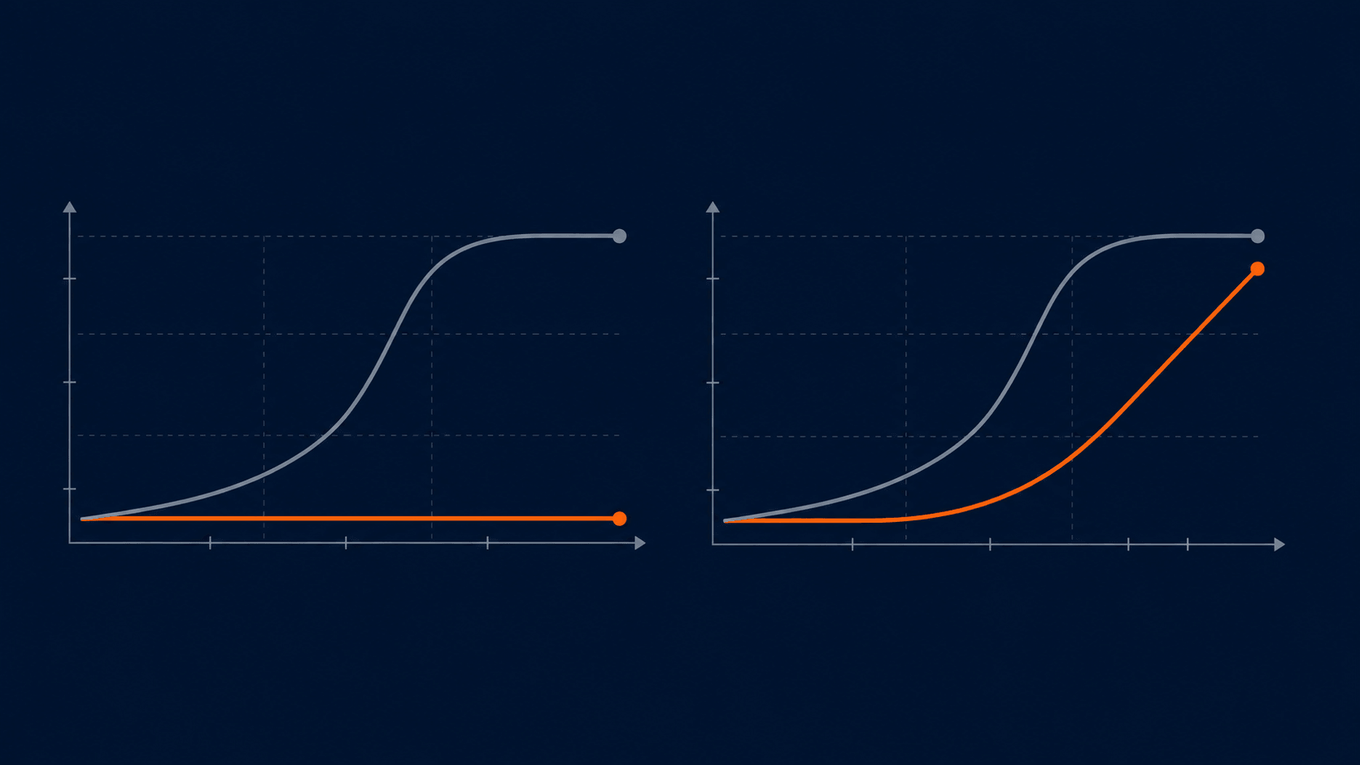
The value is not that bandwidth is free. The value is that bandwidth cost becomes predictable.
Compare the alternatives.
Self-hosted (WooCommerce, Magento, custom LAMP stack). You size a hosting plan against expected traffic. Guess low and a successful campaign either slows the store or takes it down. Guess high and you pay for headroom you never use every month of the year.
Headless and composable (Next.js, Hydrogen, custom frontends). Bandwidth becomes egress, and egress is metered by the platform serving it. This is where costs get genuinely unpredictable. Vendor and agency estimates of a viral traffic event producing a four-figure hosting bill circulate widely, though these are usually illustrative figures rather than audited case studies. The underlying mechanic is real regardless of the exact number: on metered infrastructure, your worst month for cost is your best month for sales. A Webflow to Astro migration trades platform convenience for more control over exactly this kind of tradeoff.
Shopify. The subscription is the bandwidth cost. Black Friday and a quiet Tuesday in March bill identically.
For a founder, that is one fewer variable in a P&L that already has too many. For an agency scoping a build, it removes an entire category of client conversation about infrastructure cost forecasting.
This is a genuine strength of the platform, and it is the honest reason to like Shopify’s bandwidth model.
Now the part most articles on this topic skip.
Is Unlimited Bandwidth the Same as a Fast Store?
No. These are separate problems and they get confused constantly.
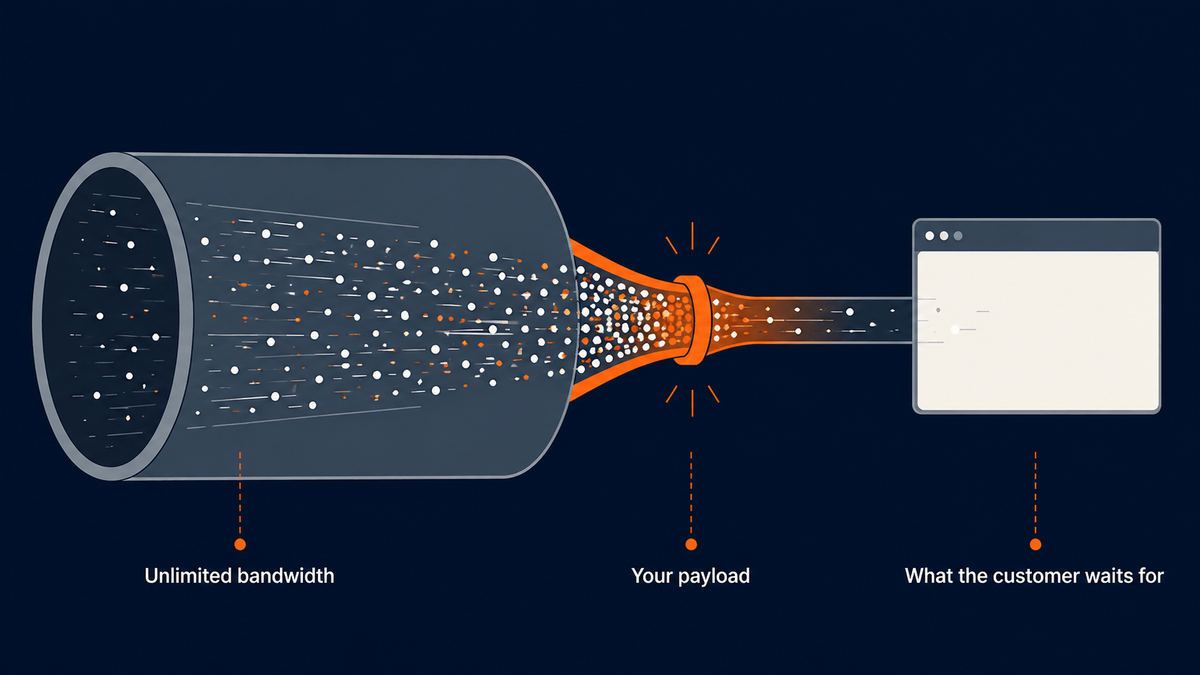
Unlimited bandwidth is a billing guarantee. It promises Shopify will deliver your store’s assets without metering you.
Page speed is a payload and rendering problem. It depends on how much your store asks the browser to download, parse, and execute before a customer sees a usable page.
Shopify controls the first. You control the second.

Here is the practical version. Two stores on identical plans:
| Store A | Store B | |
|---|---|---|
| Hero image | 2.8MB PNG | 180KB WebP |
| Installed apps injecting scripts | 14 | 4 |
| Theme | Heavily customized premium theme | Lean, audited theme |
| Fonts loaded | 6 weights | 2 weights |
| Bandwidth cost | $0 extra | $0 extra |
| Largest Contentful Paint | Poor | Good |
Both have unlimited bandwidth. One converts better than the other.
Google's Core Web Vitals measure the second column, not the first. Bandwidth generosity does not appear anywhere in that assessment.
What Actually Slows Down a Shopify Store?
In practice, four things account for most of it.

1. App script accumulation. This is the biggest offender and the most invisible. Every app that adds front-end functionality typically injects JavaScript into your theme. Reviews, upsells, popups, live chat, wishlists, currency switchers, analytics, and heatmaps each add weight. The damage compounds because scripts block rendering and often load third-party resources of their own. Worse, uninstalling an app does not always remove its leftover code from the theme.
2. Unoptimized images. Product and lifestyle photography uploaded straight from a camera or a designer’s export is routinely ten to twenty times larger than it needs to be. Shopify’s CDN will serve a 3MB image very efficiently. It is still a 3MB image.
3. Theme bloat and customization debt. Premium themes ship with features for every possible merchant, most of which you do not use. Layer two years of developer edits from three different contractors on top, and you get render-blocking CSS and duplicated scripts nobody dares remove.
4. Font and third-party resource loading. Multiple font families across multiple weights, loaded from external origins, delay text rendering and add connection overhead.
None of these are bandwidth problems. All of them are speed problems. And speed is a conversion problem, which makes it a revenue problem.
How Do I Audit My Own Store’s Real Bottleneck?
You can get a directional answer in about twenty minutes without any tooling budget.
- Run PageSpeed Insights on a product page, not the homepage. Product and collection pages carry more app scripts and are where purchase decisions happen. The homepage flatters you.
- Open Chrome DevTools, go to the Network tab, hard refresh. Sort by size. Anything over 200KB deserves an explanation.
- Count third-party domains in that same waterfall. Each unique domain is a separate DNS lookup and connection. More than eight is a signal.
- List every installed app and mark which ones inject front-end code. Then mark which ones you actually still use. The gap between those two lists is usually where the easy wins are.
- Check your largest images against their rendered size. A 2400px image displayed in a 600px container is wasting three quarters of its payload.
- Test on throttled mobile, not desktop broadband. Most ecommerce traffic is mobile, and mobile is where payload weight hurts most.

If steps 1 through 6 come back clean, your store is genuinely fast and bandwidth was never your issue. If they do not, you now know which of the four causes above is yours.
Frequently asked questions
Does Shopify charge for bandwidth overages?
No. Shopify’s pricing documentation states that plans include unlimited bandwidth with no bandwidth fees. Traffic volume does not affect your subscription cost.
Is bandwidth unlimited on the cheapest Shopify plan?
Yes. Unlimited bandwidth applies across Shopify’s standard plans, not only on higher tiers. The differences between plans are in staff accounts, payment processing rates, reporting, and advanced features, not data transfer.
Does unlimited bandwidth mean my store will be fast?
No. Unlimited bandwidth means you are not billed for data transfer. Page speed depends on how much data your store sends per page, which is determined by your theme, images, apps, and scripts.
Can a traffic spike take my Shopify store offline?
Shopify handles infrastructure scaling automatically, so traffic spikes do not require merchant intervention or server provisioning. This is a meaningful difference from self-hosted platforms where traffic surges can exhaust a hosting plan.
Is Shopify cheaper than headless for bandwidth?
For most stores, yes, and more importantly it is more predictable. Headless architectures move bandwidth into metered platform egress, where your highest-traffic month is also your highest-cost month. Headless can still be the right choice for other reasons, but bandwidth economics is not one of them below significant scale.
Does the Shopify CDN optimize my images automatically?
Shopify serves images through its CDN and can deliver modern formats, but it does not fix a source file that is far larger than it needs to be or sized far beyond its display container. Upload discipline still matters.
Key Takeaways
- Shopify includes unlimited bandwidth on every plan with no overage fees, confirmed on Shopify’s own pricing page.
- Assets are served through a global CDN operated by Fastly, included in the subscription.
- The real benefit is cost predictability, not free data. Your highest-traffic month costs the same as your quietest.
- Metered platforms invert that: peak sales periods produce peak infrastructure bills.
- Unlimited bandwidth is a billing guarantee, not a performance guarantee.
- Store speed is determined by app scripts, image weight, theme bloat, and font loading, all of which sit on your side of the line.
- Audit product pages on throttled mobile, not the homepage on desktop.